


.png)


Structured Cabling for Businesses: Benefits, Importance, and Choosing the Right Provider
A slow network often gets blamed on the internet provider, the router, or the software. Sometimes those are the problem. But in many buildings, the real issue is hidden behind walls, above ceilings, and inside equipment rooms.
That hidden system is cabling.
For businesses, structured cabling is the physical foundation that keeps computers, phones, Wi-Fi access points, security cameras, access control systems, servers, and cloud services connected. When it is planned well, the network feels reliable and ready to grow. When it is poorly installed, every upgrade becomes harder, outages become more common, and troubleshooting takes longer than it should.
Structured cabling may not be the most visible part of a business technology plan, but it affects almost everything that runs across the network.

What structured cabling means
Structured cabling is a planned system of cables, connectors, patch panels, racks, pathways, and outlets that supports a building’s communication network. Instead of running one cable at a time whenever a new device needs a connection, structured cabling creates an organized system that can support many technologies from a central point.
A typical structured cabling system may include:
Horizontal cabling that runs from work areas or device locations back to a telecommunications room
Backbone cabling that connects equipment rooms, floors, or buildings
Patch panels that make it easier to manage connections
Equipment racks and cabinets that hold switches, routers, and related hardware
Wall ports, floor boxes, or ceiling drops for devices
Cable pathways such as trays, conduits, and sleeves
Labels and documentation that identify where each cable starts and ends
In simple terms, structured cabling gives the network a clear physical layout. It avoids the messy, one-off approach that leaves businesses with tangled cables, unknown connections, and limited room for future changes.
A good installation also follows industry standards for cable type, distance limits, bend radius, separation from electrical interference, grounding, firestopping, and testing. Those details matter. A cable can look fine from the outside and still perform poorly if it was pulled too tightly, terminated incorrectly, or installed near sources of interference.
Why structured cabling matters in modern networking
Business networks now carry much more than basic internet traffic. A single cabling system may support:
Desktop computers and point-of-sale systems
Voice over IP phones
Wireless access points
Security cameras
Door access controls
Conference systems
Printers and scanners
Building automation devices
Servers, storage, and cloud-connected applications
Many of these devices rely on stable, low-latency connections. Some also use Power over Ethernet, often called PoE, which sends both data and power through one network cable. That makes installation cleaner for cameras, phones, access points, and sensors, but it also increases the need for proper cable selection and installation quality.
Poor cabling can create symptoms that are hard to diagnose. Users may report dropped calls, slow file transfers, weak Wi-Fi in certain areas, camera outages, or devices that disconnect at random. The issue may come from bad terminations, damaged cable, overloaded pathways, poor labeling, or cables that do not meet the speed needs of the installed equipment.
Structured cabling reduces guesswork. It gives IT teams and service providers a documented system they can test, trace, and expand.
The main business benefits of structured cabling
It supports better network performance
Network equipment can only perform as well as the physical cabling allows. High-quality cabling, installed and tested correctly, helps reduce packet loss, signal degradation, and intermittent connection issues.
This does not mean cabling alone will make every application faster. Switches, routers, internet service, and device settings still matter. But cabling is the base layer. If that base is weak, other upgrades may not deliver the expected results.
For example, installing faster switches will not help much if old or damaged cable cannot support the required data rate. A structured system helps match the cable infrastructure to the network’s current and future performance needs.
It makes growth easier
Businesses change. Teams move. New devices get added. Wireless coverage needs shift. Security systems expand. A structured cabling system makes those changes simpler because connections return to known locations and follow a logical layout.
Without structured cabling, every change may require tracing unknown cables, opening ceilings, or running new lines in a hurry. That can disrupt operations and produce more clutter over time.
With a planned system, adding a new access point, camera, printer, or workstation is usually more predictable. The provider can identify available ports, patch the right connection, update labels, and test the link.
It reduces downtime and troubleshooting time
When cables are unlabeled or poorly routed, small problems can take hours to solve. A technician may need to tone out lines, follow cables through ceilings, or test multiple ports before finding the source of a failure.
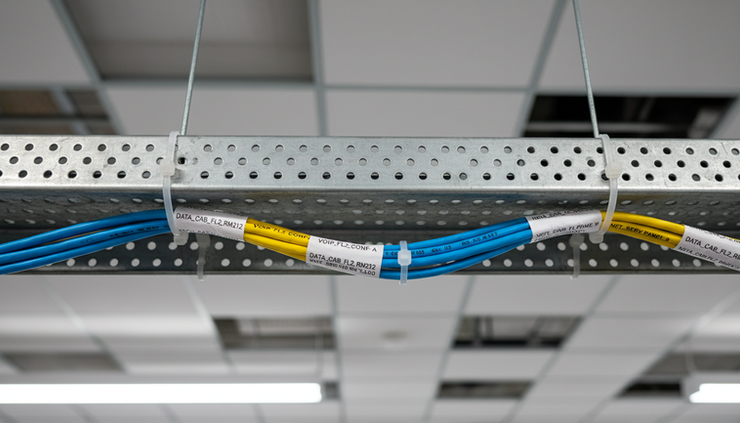
Structured cabling improves serviceability. Clear labeling and documentation show where each cable goes. Certified test results show whether each run passed performance standards at the time of installation. Patch panels keep changes controlled rather than scattered across random locations.
That organization can reduce downtime when something goes wrong. It also helps prevent accidental disconnections when technicians work in crowded equipment rooms.
It creates a cleaner and safer installation
Messy cabling is more than an eyesore. Cables draped across floors, piled behind equipment, or packed tightly without support can create safety risks and maintenance problems.
Professional structured cabling uses cable management, pathways, and mounting hardware to protect the installation. It also accounts for building codes, fire ratings, plenum spaces, and proper penetrations through walls or floors.
This is especially important in commercial buildings, healthcare spaces, schools, warehouses, retail locations, and multi-tenant properties where cable pathways may pass through shared or regulated spaces.
It can lower long-term costs
Structured cabling requires planning and professional labor. That upfront investment often pays off through fewer emergency fixes, easier moves and changes, and longer useful life.
A piecemeal cabling approach may look cheaper at first. Over time, though, it can create hidden costs:
More labor to trace and repair unknown cables
Higher risk of network interruptions
Rework when new devices need better cabling
Wasted switch ports from abandoned or mislabeled lines
Trouble proving whether the cable plant can support new equipment
A structured system helps avoid paying for the same problem more than once.
What a structured cabling project usually includes
A reliable provider does more than pull cables. The process should start with discovery and planning.
The provider should look at the building layout, current network equipment, device counts, bandwidth needs, and growth plans. For some businesses, that means a small project with new drops and a cleaned-up rack. For others, it may involve a full buildout with new telecommunications rooms, backbone fiber, racks, patch panels, and hundreds of cable runs.
Common project steps include:
Site assessment
The provider reviews the space, ceiling access, existing pathways, equipment locations, electrical concerns, and device placement.
Design and scope
The team defines cable types, quantities, pathways, rack locations, labeling format, testing requirements, and project phases.
Installation
Cables are pulled, supported, terminated, dressed, and connected to patch panels and outlets.
Testing and certification
Each cable run is tested to confirm performance. The provider should supply test reports when certification is part of the scope.
Labeling and documentation
The finished system should include clear labels and a record of cable IDs, port locations, and patch panel assignments.
Cleanup and handoff
The provider removes debris, reviews the finished work, and explains how the system is organized.
Documentation is easy to overlook, but it is one of the most useful parts of the project. A clean rack helps on day one. Accurate records keep helping for years.

How to find reliable structured cabling services in your area
Finding a cabling contractor should involve more than searching for the lowest price. The right provider affects network reliability, building safety, and the ease of future technology upgrades.
Start with a focused local search. Use terms that match the work needed, such as commercial network cabling, low-voltage cabling, fiber optic cabling, data cabling, or structured cabling services. Review company websites to see whether they handle business environments, not just residential wiring.
Ask neighboring businesses, property managers, managed IT providers, electricians, and security vendors for referrals. Many strong cabling firms work behind the scenes through IT companies and general contractors, so word-of-mouth recommendations can be useful.
When reviewing options, look for signs of professional process:
Clear descriptions of commercial cabling services
Experience with buildings similar to yours
Photos or examples of organized rack and cable work
Testing and certification capabilities
Knowledge of copper, fiber, PoE, and wireless access point cabling
Willingness to visit the site before giving a final quote
Written scopes that define materials, quantities, and exclusions
Be careful with vague estimates. A quote that simply says “install network cables” leaves too much room for misunderstanding. It should state the cable category, number of drops, termination points, testing level, labeling, pathways, and any assumptions about ceiling access or after-hours work.
Key factors to consider when choosing a provider
Experience with business environments
Commercial cabling is different from basic home networking. Business sites often involve plenum-rated cable, lift work, multiple telecommunications rooms, building rules, tenant improvement schedules, and coordination with other trades.
Ask how long the provider has performed low-voltage or structured cabling work. Also ask about similar projects. A retail store, medical office, warehouse, school, and multi-floor office buildout all have different requirements.
The best provider does not need to have done the exact same project hundreds of times, but they should understand the environment and ask detailed questions before work begins.
Certifications and standards knowledge
Certifications show that technicians and companies have invested in training. They also suggest familiarity with accepted installation practices.
Relevant areas may include manufacturer training, fiber optic certification, network cabling credentials, safety training, and knowledge of industry standards from groups such as TIA and BICSI. Not every project requires every credential, but a provider should be able to explain which standards and methods guide their work.
Also ask whether the installation can qualify for a manufacturer warranty. Some cabling manufacturers offer extended warranties only when certified installers use approved components and testing methods.
Testing and documentation
Every business cabling project should include testing. The level of testing depends on the project, but the provider should explain the difference between basic wire mapping and full certification testing.
Basic testing checks whether conductors are connected correctly. Certification testing goes further and measures performance against a defined standard. For higher-speed copper runs or fiber links, certification can be valuable.
Ask what documentation you will receive after the project. At minimum, expect a cable schedule or labeled port list. For larger projects, ask for test results and marked-up plans.
Customer reviews and references
Reviews can reveal patterns. A single negative review may not tell the whole story, but repeated complaints about missed deadlines, messy work, poor communication, or surprise charges are warning signs.
Look for comments about:
Work quality
Cleanliness
Communication
Timeliness
Follow-up support
Accuracy of estimates
Ability to solve problems on site
For larger projects, ask for references. A short conversation with a past customer can show how the provider handles change orders, scheduling pressure, and post-installation support.
Clear pricing and scope
Cabling quotes can vary because providers may include different materials, testing, pathways, or labor assumptions. Compare scopes, not just totals.
Factor | What to ask |
Cable type | Is the quote using the right category or fiber type for the project? |
Terminations | Are patch panels, jacks, faceplates, and rack hardware included? |
Testing | Will each run be tested, certified, or only checked for continuity? |
Labeling | Will both ends of every cable be labeled clearly? |
Pathways | Are conduits, sleeves, cable trays, hooks, or firestopping included? |
Schedule | Will work happen during business hours, after hours, or in phases? |
Cleanup | Will old abandoned cabling or debris be removed if requested? |
The lowest bid may exclude work that another provider included. A detailed quote protects both sides.
Questions to ask before hiring a cabling contractor
Before signing, ask practical questions that reveal how the provider works.
How will you assess the site before installation?
What cable type do you recommend, and why?
Will you provide a written scope and drawing or cable schedule?
Who will perform the work, employees or subcontractors?
Are you licensed or registered for low-voltage work where required?
Do you carry insurance suitable for commercial work?
How will you label each cable and port?
What testing equipment will you use?
Will you provide test results after completion?
How do you handle changes discovered during installation?
What warranty do you offer on labor and materials?
Strong providers welcome these questions. They know that clear expectations lead to better projects.

Common mistakes to avoid
Businesses often run into cabling problems because decisions are made too quickly during moves, renovations, or equipment upgrades. A few common mistakes can create long-term trouble.
Choosing cable only for today
A small cost savings can become expensive if the cabling cannot support future speeds, PoE needs, or device growth. The right choice depends on distance, environment, and planned use.
Skipping documentation
An unlabeled cable might work today, but it becomes a problem during repairs or changes. Documentation should be part of the job, not an optional extra that gets forgotten.
Mixing too many one-off fixes
Temporary runs and quick patches can pile up. Over time, they create clutter and make the network harder to manage.
Ignoring Wi-Fi cabling needs
Wireless still depends on wires. Access points need well-placed cable runs, proper mounting locations, and enough network capacity behind them.
Hiring without checking qualifications
Low-voltage cabling looks simple when done well, but poor work can cause hidden performance and safety issues. Experience, standards knowledge, and testing matter.
A strong cabling system prepares the business for what comes next
At US Connect, structured cabling is not just a construction detail or an IT line item. It is the physical framework that supports daily operations, customer service, security, collaboration, and future technology projects.
A well-designed system gives a business cleaner network rooms, easier troubleshooting, better device support, and a clearer path for growth. It also helps avoid the confusion that comes from years of undocumented cable runs and quick fixes.
When choosing a provider, look beyond price. Focus on experience, certifications, testing, documentation, and customer reviews. A reliable cabling contractor should ask good questions, inspect the site, explain the scope clearly, and leave behind a system that is easy to understand.
The best time to address cabling is before network problems become routine. A planned, tested, and documented cabling system gives every connected device a stronger foundation.
Comments